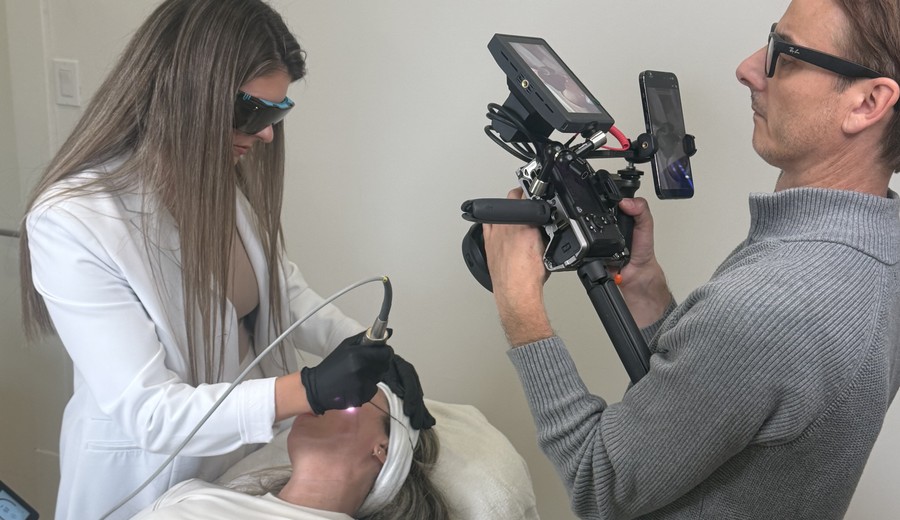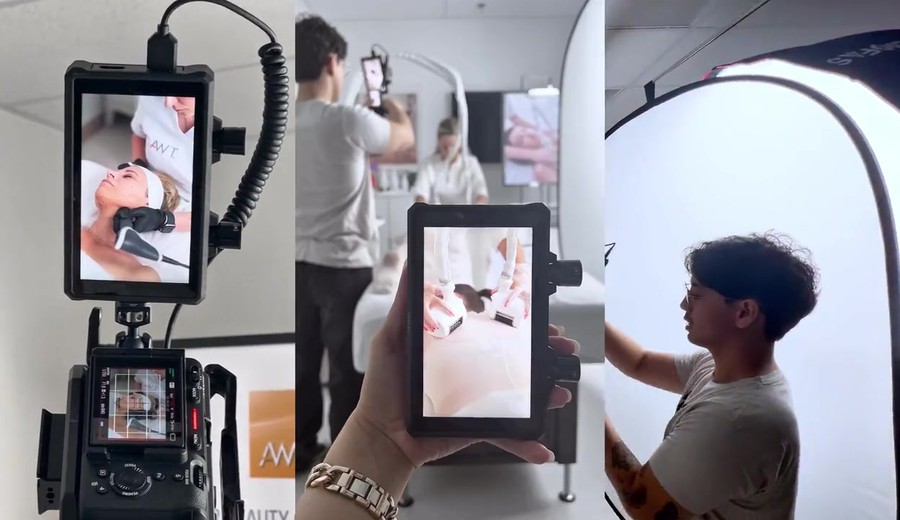
In today’s competitive skincare and beauty industry, consumers are no longer swayed by vague promises, they demand visible, proven results. Outcome‑based marketing empowers brands to showcase the real impact of their products, from glowing complexions to reduced fine lines. By centering campaigns on measurable transformations, beauty businesses can strengthen trust, boost brand authority, and inspire long‑term customer loyalty. The modern skincare ecosystem has undergone a profound structural shift from superficial aesthetics to transparent, outcomes-driven, and science-backed performance. In this article, we discuss how founders and e-commerce directors must pivot to outcome-based marketing for skincare and beauty brands.
Outcome‑based marketing shifts the focus from product claims to tangible results that consumers can see and feel. Moreover, in the skincare and beauty industry, buyers are increasingly skeptical of generic promises, instead, they want proof of radiant skin, reduced blemishes, or visible anti‑aging effects. Therefore, by highlighting real outcomes backed by testimonials, clinical studies, or before‑and‑after visuals, brands can build credibility and trust. Consequently, this approach not only strengthens customer loyalty but also improves conversion rates, as shoppers are more likely to invest in products that demonstrate measurable benefits.
The purchase journey for a skincare product is fundamentally different from apparel, lifestyle accessories, or general cosmetics. Skincare products interact directly with human biology, and carry the risk of adverse physiological reactions like purging, contact dermatitis, or breakouts. An effective skincare customer journey is segmented not by traditional demographic buckets, but by concern-driven discovery. Consumers experience the market through the lens of a specific, localized dermatological pain point: cystic acne, post-inflammatory hyperpigmentation (PIH), melasma, rosacea, structural elasticity loss, or an impaired moisture barrier.
The journey begins when a consumer encounters an acute skin frustration or a desire for architectural skin optimization. At this point, the consumer rarely searches for a specific brand name; instead, they query highly specific problem statements into search engines and social platforms. For instance: “How to clear post-acne dark spots on dark skin tones” or “Why does my face burn when I apply moisturizer?” This is the exact inflection point where educational marketing must intercept the prospect.
Once a consumer identifies a potential solution or active ingredient (e.g., realizing they need Tranexamic Acid or Azelaic Acid to treat their hyperpigmentation), they enter a rigorous verification and evaluation loop. This involves three distinct steps:
By mapping your e-commerce funnels to support these highly analytical evaluation loops, your brand transforms from an intrusive advertiser into a supportive guide, drastically compressing the length of the consideration window.
If trust is the primary currency of skincare sales, content marketing is the treasury that prints it. To stand out in a saturated market, your brand must commit to radical ingredient transparency and objective educational authority. You must build a comprehensive digital knowledge base that treats your target audience with high intellectual respect.
Do not hide your ingredient list in microscopic font at the bottom of your packaging or product pages. Elevate your formulation architecture to the center of your marketing narratives. Explain exactly why every single raw material is present in your product. Create an “Ingredient Glossary” on your e-commerce storefront that details the source, function, and scientific rationale behind every active, vehicle, humectant, and preservative in your formulas. For example, instead of simply claiming your serum contains Niacinamide, your content should explicitly educate the consumer that your formulation uses an ultra-pure 5% concentration. This precise percentage is clinically proven to reduce sebum production and inhibit melanosome transfer without triggering the transient facial flushing or irritation frequently caused by over-saturated 10% or 15% formulations available on the market.
The Skin Barrier Narrative Framework: One of the most powerful and sustained paradigms in modern skincare marketing is the concept of skin barrier repair. Consumers have spent years over-exfoliating their skin with harsh acids and aggressive scrubs, leading to chronic inflammation, dehydration, and breakouts. Educational content that focuses on repairing the stratum corneum with optimal ratios of ceramides, cholesterol, and free fatty acids positions your brand as a restorative, corrective solution rather than another stripping agent.
If your brand has invested in independent clinical trials or consumer perception studies, do not leave that data locked away in dry, multi-page PDF documents. Translate those clinical data sets into engaging, highly scannable visual media. Use clear bar charts, high-resolution cross-polarized before-and-after photography (ensuring identical lighting, angles, and backgrounds), and clear mathematical timelines. When presenting clinical trials, always be transparent about sample sizes, study duration, and instrumentation methodologies. This transparency immediately separates your brand from competitor brands utilizing unscientific, self-reported, or biased internal testing loops.
Skincare is a highly sensory, tactile experience, yet e-commerce isolates consumers from physical touch. High-performance video marketing bridges this sensory gap by turning your digital screens into tactile, interactive experiences. It provides the visual proof that answers a consumer’s unspoken question: “What will this product actually feel like on my skin?”
To communicate the sensory luxury and functional performance of a formula, your video content production must focus heavily on Macro Texture Reveals. These videos highlight the precise physical attributes of your product formulas:
TikTok has fundamentally transformed how skincare products are discovered and purchased, forcing a total evolution in modern skincare brand marketing. The platform’s algorithm favors high-value, informative entertainment over heavily polished corporate brand assets. To maximize ROI on TikTok marketing, your brand must lean into educational, trend-based architectures:
Social media platforms should not be used as static broadcasting channels; they are interactive hubs meant for building deep customer communities and driving low-friction sales. Each major platform requires a distinct structural layout, a customized visual language, and an intentional community architecture.
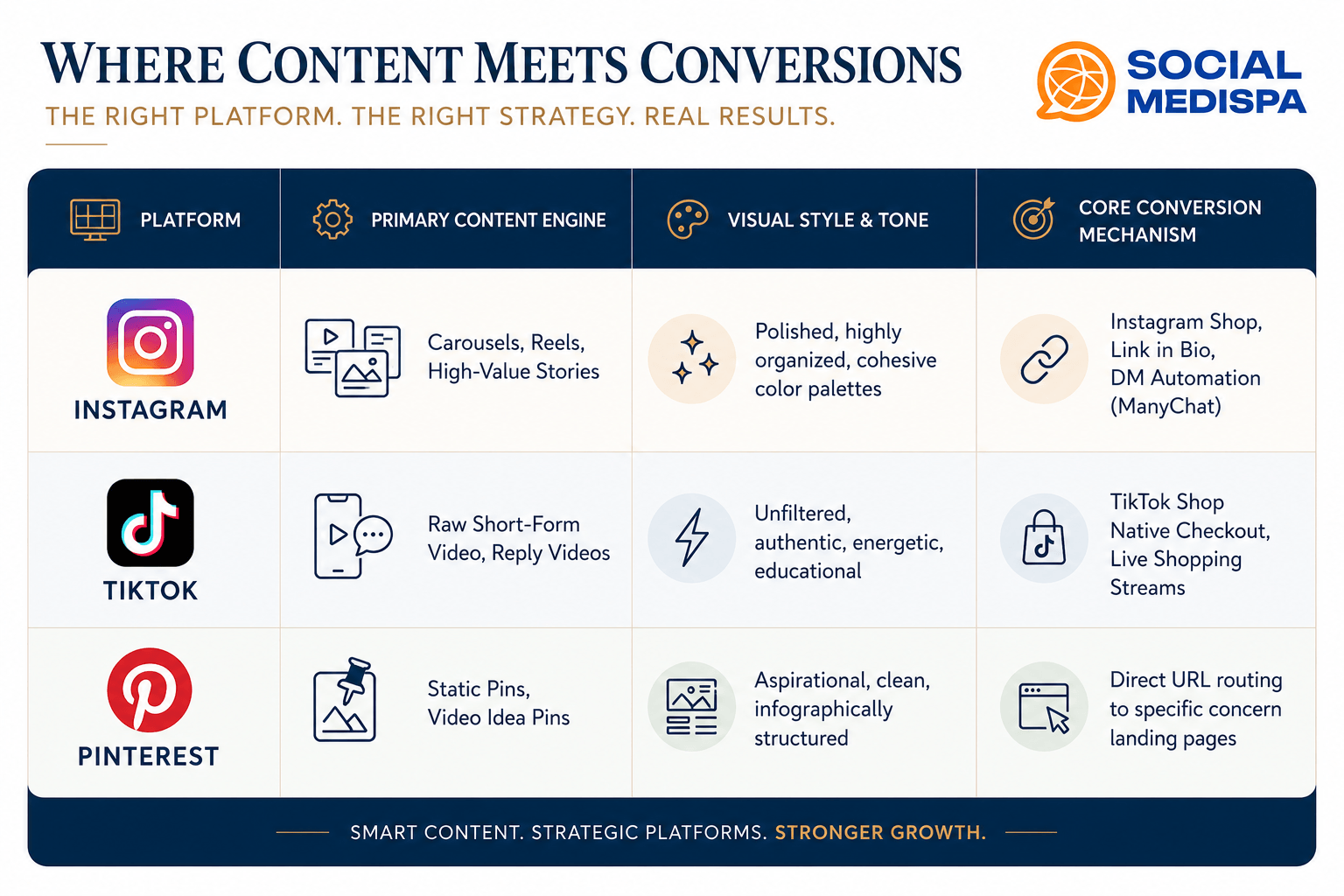
Utilize your social media channels to turn your audience into active stakeholders in your brand’s development. Run interactive Instagram Stories or broadcast channels where followers vote on product development variables: choosing between two unique natural scent profiles, choosing a preferred pump mechanism vs. a dropper bottle, or deciding the volume of a travel-size release. By giving your community a voice in the formulation and packaging decisions, you build a loyal consumer base that feels deeply invested in the success of the product long before the official launch date.
Influencer marketing is a core pillar of skincare scaling, but the era of paying creators based solely on vanity metrics like follower counts is over. To build a highly profitable influencer program, beauty brands must adopt strict fraud detection protocols and establish authentic, structured partner ecosystems.
Before allocating any marketing budget to a creator, your internal marketing team must run a comprehensive audit to protect your brand against follower fraud and artificial engagement. Implement the following verification protocol:
Do not sink your entire creator budget into a single macro-celebrity. Instead, construct a diversified influencer portfolio built across three distinct tiers, ensuring clear KPIs for each segment:
While paid social media and search engines drive initial customer acquisition, your brand’s true profitability is unlocked through retention. In skincare, where products naturally deplete and require regular replacement, email and SMS marketing serve as your primary retention engines.
To transition a one-time buyer into a dedicated brand advocate, you must deploy a highly segmented, automated Post-Purchase Lifecycle Journey. This system is broken down into precise chronological steps based on typical consumer behavior and product utilization rates:
SMS is a highly intimate, high-urgency channel that maintains open rates exceeding 98%. Reserve your SMS channel for high-priority operational and promotional notifications: alerting subscribers to limited-run product restocks, early-access drops for upcoming product launches, and exclusive flash sales. Always segment your text lists so that your highly engaged VIP cohorts receive access 24 to 48 hours before the general public, driving immediate cash-flow injections while reinforcing customer loyalty.
Search Engine Optimization represents the ultimate long-term compounding asset in digital skincare brand marketing. While paid ad costs fluctuate wildly based on ad network privacy changes and seasonal brand bidding wars, organic search traffic delivers a stable, high-intent flow of consumers actively seeking solutions to specific skin problems.
The Semantic Topic Cluster Framework
Modern Google search algorithms look past simple keyword stuffing; they reward comprehensive topical authority. To rank for highly competitive high-volume keywords, your brand must build deep Semantic Topic Clusters. This structural model maps your content architecture into clear authority hubs:
Total Organic Authority = Pillar Content Depth X Supporting Cluster Coverage
For example, if you want your e-commerce site to rank for the highly competitive search term “hyperpigmentation treatment,” you must construct a central, exhaustive 5,000-word Pillar Page that outlines everything known about hyperpigmentation: its biological causes, different variants (melasma vs. post-inflammatory hyperpigmentation), treatment methods, and expected timelines.
Surrounding this central pillar page, you must write 10 to 15 tightly focused supporting cluster articles that interlink directly back to the main pillar. Example supporting topics include:
This internal hyperlinking structure signals to search engines that your website is an authoritative, deeply researched repository of dermatological information, driving all your core informational and commercial pages higher in search rankings.
Skincare websites are inherently image-heavy, featuring high-resolution before-and-after photos, unboxing graphics, and ingredient deep-dives. Without rigorous optimization, this visual weight will severely degrade page load speeds, directly damaging both your Google search rankings and your e-commerce conversion rates. Enforce the following technical guidelines:
Acquiring traffic to your skincare e-commerce store is only half the battle. Consequently, if your conversion rate optimization (CRO) is weak, you are overspending to acquire traffic that leaves without completing a purchase. Optimizing your digital storefront requires specialized, industry-specific product page architecture and aggressive checkout recovery flows.
A standard e-commerce product page is insufficient for a complex skincare item. Your PDP layout should function as a comprehensive sales page that answers every potential objection a consumer may hold. It must structurally incorporate:
Google Shopping ads capture consumers at the absolute peak of their transactional buying intent, the exact moment they search for a specific product type to buy. To capture this traffic efficiently, optimize your Merchant Center product feed with these high-performance strategies:
Cart Abandonment Recovery Sequences That Recover 15-25% of Lost Sales
When a shopper adds a skincare item to their shopping cart but leaves before completing checkout, they are typically held back by unexpected shipping costs, hidden taxes, or a sudden flare-up of buying hesitation. Deploy a highly strategic, 3-tiered automated recovery sequence across both Email and SMS to win back these lost conversions: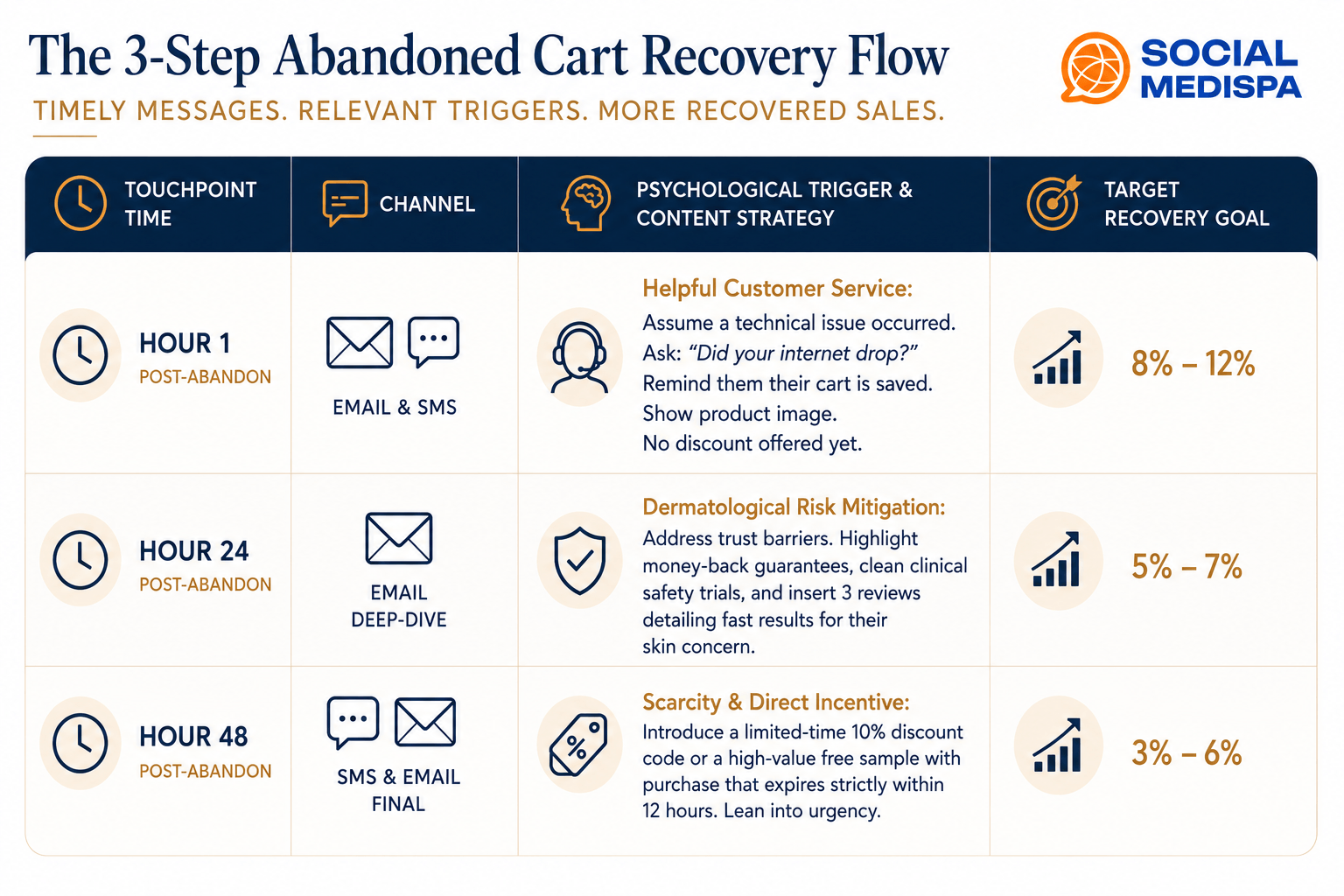
In skincare brand marketing, consumer peer reviews carry significantly more trust and authority than a brand’s internal marketing claims. User-Generated Content (UGC) serves as the social validation that converts hesitant website browsers into active buyers.
The most valuable asset in skincare validation is the classic Before-and-After transformation profile. However, left to their own devices, customers often upload low-quality, poorly lit, or unhelpful photos. Your marketing team must proactively guide and reward your community to build high-converting asset libraries. Incentivize compliance by offering participants high‑value rewards, such as a free full‑sized product replacement. Therefore, they must submit verified 30‑day and 60‑day progress photos along with a written skin journey summary. As a result, this systematic approach generates authentic and persuasive visual marketing collateral. Moreover, the content fuels paid advertising accounts. Ultimately, it creates a predictable stream of credibility, authority, and sustainable brand growth.
The Holy Grail of skincare financial architecture is predictable, recurring subscription revenue. Hence, skincare products are consumable commodities with natural depletion lifecycles; they are ideally suited for automated subscription models. However, scaling a subscription program requires moving past basic “Subscribe & Save” discount buttons.
A major driver of subscription cancellation (churn) is product accumulation, where a customer receives their next bottle of serum. In contrast, their current bottle is still half-full, causing them to feel overwhelmed and cancel the service entirely. To mitigate this issue, audit your real-world usage data and set your automated subscription shipping frequencies to match true usage timelines:
Give your subscribers full, friction-free control over their subscription portals. Allow them to easily skip a delivery, delay an order by 14 days, or swap their current product SKU for an alternative item directly via a simple text message or a 1-click dashboard mobile interface. Reducing subscription management friction dramatically extends your customer retention periods.
A beauty brand cannot scale sustainably without clean financial tracking and data-driven management. High-performance growth requires tracking clear, actionable financial metrics that look past surface-level ad account dashboards.
To evaluate the real-world efficiency of your marketing spend, your team must continuously calculate and balance three critical core equations:
In highly competitive customer acquisition environments, a top‑tier skincare brand may break even or face slight losses on the first purchase. Therefore, the true enterprise value emerges between months three and twelve. As a result, automated replenishment flows drive recurring sales. Moreover, cross‑product bundling enhances engagement. Ultimately, subscription retention programs unlock sustainable growth and long‑term profitability. Your Payback Period metrics, the precise number of days required for a newly acquired customer to generate enough cumulative gross margin to pay off their initial acquisition cost fully- must remain under 60 to 90 days to maintain healthy corporate cash flow.
Outcome‑based marketing for skincare and beauty brands emphasizes measurable results, authentic credibility, and predictable growth. Therefore, by focusing on visible transformations rather than generic claims, businesses build trust and strengthen customer loyalty. Moreover, this approach ensures that marketing efforts resonate with modern consumers who demand proof and transparency. Consequently, brands that adopt this strategy position themselves as credible leaders in a competitive market.
Ready to eliminate marketing waste, command authentic scientific authority, and predictably scale your enterprise revenue? Social Medispa leads this transformation by combining advanced scaling frameworks, community‑building strategies, and conversion blueprints tailored for skincare and beauty brands.